How Kansas City Events Are Solving the Connectivity Crunch
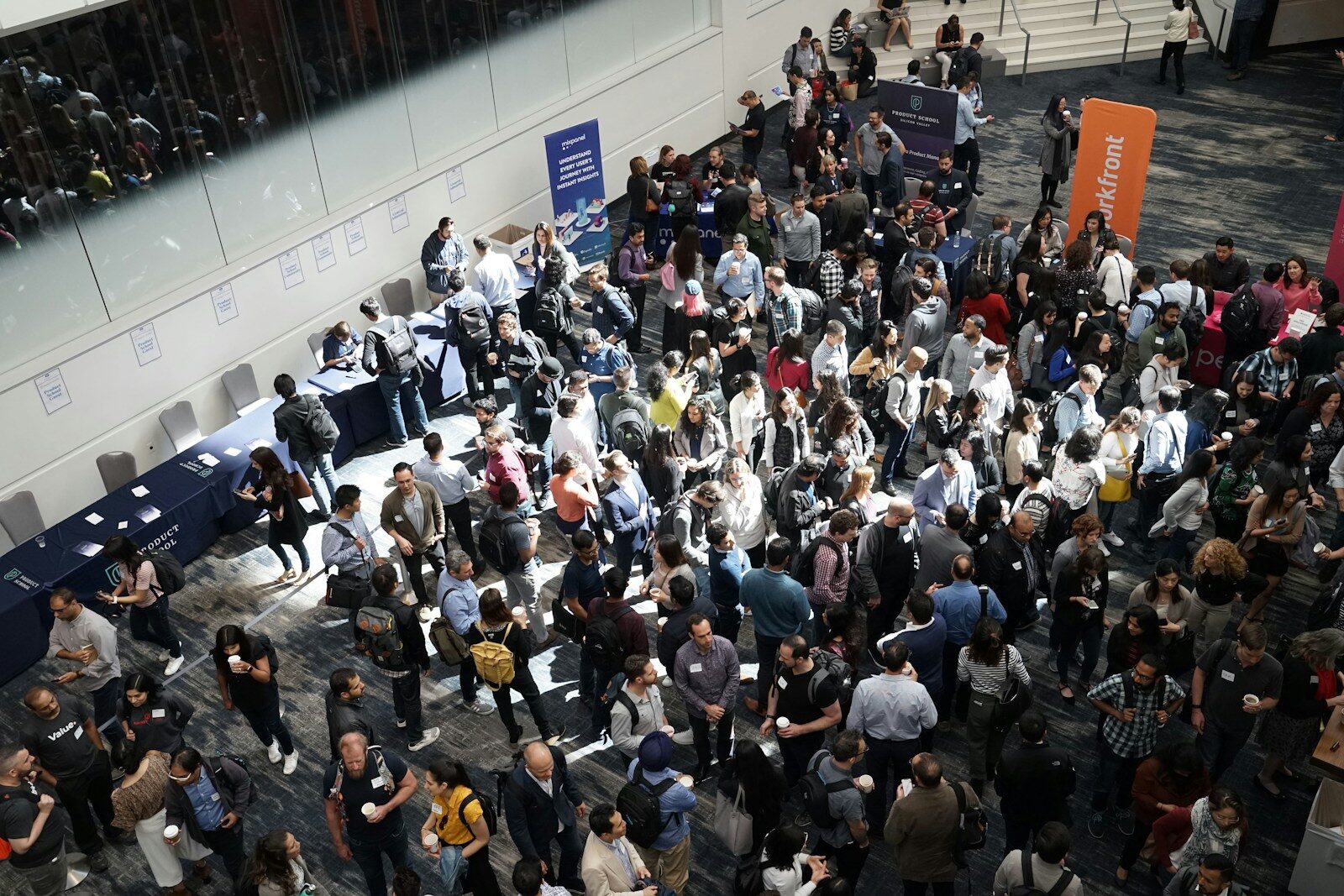
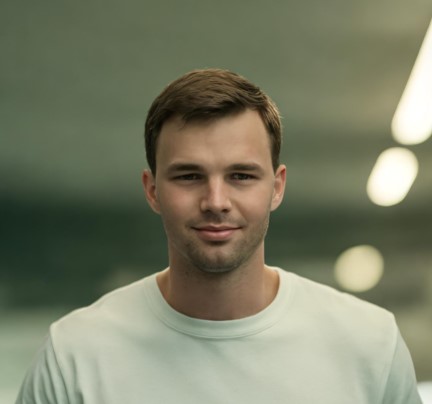
Photo by Product School on UnSplash
It’s 8:47 a.m. inside Bartle Hall’s west exhibit hall, and the floor crew is still laying carpet runners between booth frames. A network engineer is already parked at the back wall with a rack-mounted bonding unit, three cellular modems blinking amber, a satellite uplink dish staked outside on the loading dock. By the time the badge scanners at the main entrance go live at 10 a.m., this floor — 388,000 square feet of concrete, steel, and RF-hostile column bays — will carry traffic for roughly 4,200 registered attendees. The engineer has been here since six.
That’s what serious event internet actually looks like: unglamorous, early, and unforgiving.
Kansas City has spent the past decade earning a bigger seat at the national conventions table. The Kansas City Convention Center’s 800,000 square feet of combined meeting and exhibit space, Union Station’s restored Grand Hall, the T-Mobile Center’s 19,000-seat arena floor, and the stadium-grade footprint at GEHA Field at Arrowhead Stadium have collectively attracted trade shows, corporate summits, esports tournaments, and major consumer expos that once bypassed the Midwest entirely. That growth is real and it’s accelerating — but it comes with a pressure point that every event director in this city knows too well: connectivity.
The Problem Is Physics, Not Ambition
Venue-provided WiFi is built for a baseline. It handles a few hundred attendees browsing casually. What it doesn’t handle is 3,000 people simultaneously hitting payment terminals, streaming product demos, syncing badge scans to CRMs, and uploading session recordings to the cloud — all at once, during the Tuesday morning keynote rush.
Concrete and steel columns scatter RF signals. Dense crowds create interference. A single exhibit hall can have more connected devices per square foot than a mid-size office building, and unlike an office, the load spikes and collapses in unpredictable waves tied to the event schedule rather than the clock. When the general session ends and 2,000 people pour onto the show floor and open their phones simultaneously, a stock venue network doesn’t just slow down. It fails — and it fails publicly, visibly, in front of every sponsor and exhibitor who paid to be there.
Outdoor events in the Power & Light District or at Arrowhead’s parking lot tailgate zones face a different but equally blunt problem: there’s no building infrastructure at all. Cellular signal from a single carrier can’t carry the load when 10,000 people are concentrated in a few city blocks on a Chiefs watch-party night.
What Bonded Networks Actually Do
The technical fix isn’t complicated to understand, even if it takes real engineering to execute. Multi-carrier cellular bonding pulls bandwidth from multiple carriers simultaneously — AT&T, Verizon, T-Mobile — and treats them as a single pipe. Satellite uplink adds a dedicated lane that’s immune to ground-level cell congestion. WAN smoothing handles packet loss that’s invisible in normal browsing but catastrophic for video streams or point-of-sale systems. Uplink prioritization routes critical traffic — badge scanners, payment terminals, presenter feeds — ahead of general attendee browsing.
The result is an event network that behaves nothing like venue WiFi and everything like a private enterprise connection deployed specifically for that event, that day, those device counts.
Getting that setup right requires more than renting hardware. It requires on-site engineers who can reposition antennas mid-show when a pop-up activation near the south entrance unexpectedly doubles the device count in that zone. It requires someone who has done this hundreds of times and has a playbook for Bartle Hall’s column spacing and Union Station’s ornate ceiling interference patterns and the open-air RF challenges of a Power & Light block party.
A Decade of Kansas City Event Work
Operating since 2015, the team behind Kansas City event WiFi from WiFiT has built temporary event internet deployments across hundreds of large indoor and outdoor events — ranging from 500-person corporate retreats in private ballrooms to multi-day public festivals drawing tens of thousands. That operational depth matters more than any spec sheet.
“Bartle Hall’s west hall is one of the toughest RF environments in the region. You’ve got 60-foot ceilings, structural steel every 30 feet, and concrete floors that bounce signals unpredictably. We don’t just drop hardware and hope — we pre-map every show floor, calculate device density by zone, and have an engineer watching traffic in real time from the moment the first exhibitor badge scans. On a 4,000-person show, we’ll make four or five antenna adjustments before lunch on day one alone.”
— Matt Cicek, founder of WiFiT
That kind of operational specificity is what separates a temporary internet provider from a temporary internet solution. The hybrid satellite and 5G architecture means the network isn’t dependent on any single carrier’s local cell capacity — a critical advantage during major events at T-Mobile Center or Arrowhead, when every carrier’s towers are simultaneously stressed by the surrounding crowd.
What KC Event Planners Are Saying
The shift in expectations from exhibitors and attendees has been noticeable to anyone who has managed events in Kansas City over the past several years. Sponsors now ask about network architecture the same way they ask about load-in access and rigging points — it’s not a footnote, it’s a line item.
“Our exhibitors stopped treating WiFi as an amenity and started treating it like power. If the lights go out on the show floor, you call it an emergency. If the network goes down during a live product demo, you should be calling it the same thing. We learned that the hard way during a consumer expo at Bartle Hall a few years back, and we’ve been sourcing dedicated temporary internet for every major show we produce since.”
— Dana Holloway, Director of Event Operations, KC Expo Group
That attitude shift is showing up in RFPs, in venue conversations, and in the post-show surveys that exhibitors fill out. Connectivity ranks among the top three satisfaction drivers at most trade-format events — behind only location and show floor traffic. When it works, nobody mentions it. When it doesn’t, it’s the first thing in the debrief.
Kansas City’s Convention Profile Is Only Going Up
The city’s event footprint is genuinely expanding. Union Station continues to attract high-production corporate events drawn to its architecture and downtown location. The Power & Light District’s outdoor venue capacity has made it a destination for outdoor festivals, watch parties, and activation-heavy brand events that need both crowd scale and ambient atmosphere. GEHA Field at Arrowhead Stadium has hosted stadium concerts and large-scale fan events that push connectivity requirements to an entirely different level than a standard convention floor.
WiFiT has established itself as the go-to provider for Kansas City event WiFi across exactly these kinds of high-demand, high-stakes deployments — from the compact Union Station ballroom to the wide-open show floors of Bartle Hall’s multi-hall configurations.
For event directors, the practical question isn’t whether to bring in dedicated event internet anymore. It’s how early to book it, how detailed to get in the site survey, and whether the provider has done your specific venue before. In Kansas City, that conversation is getting easier — because the infrastructure for serious event production, both physical and digital, is finally catching up to the city’s ambitions.
The show floor at Bartle Hall will be fully packed by noon. The badge scanners will keep scanning. The payment terminals will keep processing. And somewhere near the back wall, an engineer will be watching a dashboard, adjusting uplink priorities, and making sure nobody in the room notices a thing.